Tote Buy-Back.
If you’ve got empty IBCs cluttering up the loading dock, send us the details. We pass your request to partner suppliers in the Denver metro and Front Range who buy used totes, so they can go back into service instead of sitting idle.
Tell us what you need
Free, no-obligation quote request. Availability depends on partner suppliers.
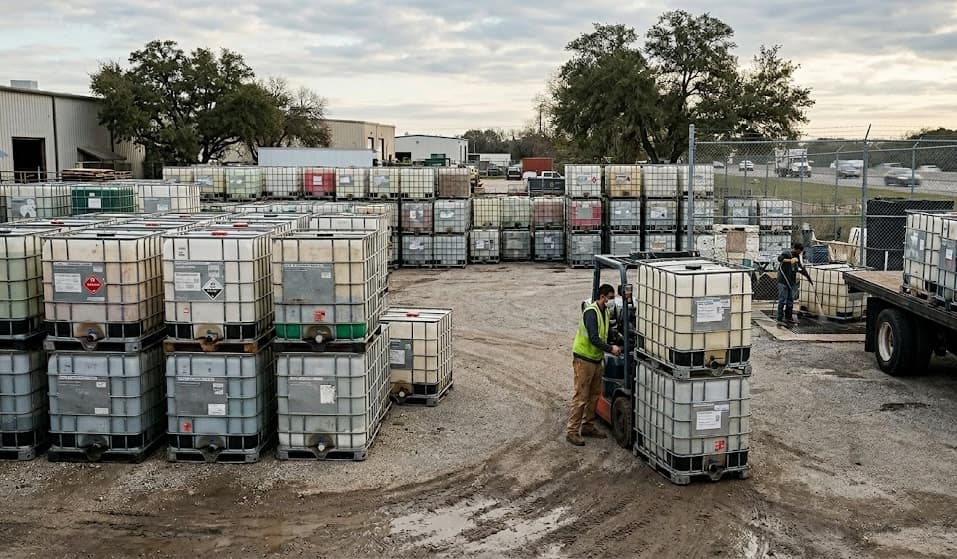
Answer first: you can sell empty IBC totes through partner suppliers in our network. Send a free, no-obligation request with your tote count, condition and location. A partner supplier follows up, and any offer, pickup arrangement and payment terms come from that supplier. Pricing depends on condition, quantity and location.
How a buy-back request works
You send a request
Use the quote form with a count, your general location, photos if you have them, and what the totes last contained.
We match it
We pass your request to partner suppliers in our network who buy used totes.
A supplier follows up
The partner supplier looks at your totes and tells you whether and how they can take them.
You decide
If the offer works for you, you arrange pickup or drop-off directly with the supplier.
Supplier handles payment
Payment method and timing are set by the partner supplier, so confirm them before the totes leave your site.
Totes that are usually easiest to sell
- 275 and 330-gallon caged composite IBCs with a sound bottle and cage
- Totes that are fully drained and have known, non-hazardous prior contents
- Stainless steel IBCs in serviceable condition
- Whole pallets of the same size, which are simpler to load and move
Totes that are often turned down
- Totes still containing residual contents
- Totes that have held hazardous waste, regulated chemicals, or unknown contents
- Cages that have been cut or welded into a different shape
- Bottles with cracks, holes or visible contamination
Totes that can’t be resold may still be candidates for recycling. If you’re unsure, include a couple of photos with your request and the supplier will tell you where your totes fit.
Why sell instead of scrap
A tote that goes back into service is one fewer new tote that has to be manufactured. Selling your empties keeps a working container in use and clears space on your dock at the same time.
What affects an offer
There is no fixed price list for used totes. Partner suppliers set their own offers, and the main factors are:
- Condition — cage straightness, bottle condition, valve and lid condition.
- Quantity — larger, uniform loads are generally easier to collect and resell.
- Location — how far the totes have to travel and how easy they are to load.
- Prior contents — totes with documented, non-hazardous prior contents are easier to place.
What information to have ready
These details help a partner supplier respond with a realistic offer. Most of them you probably have on file already.
- Prior contents for each batch — the product name and, if you have it, the safety data sheet.
- Drainage — confirmation that the totes are empty.
- Hazard status — whether the totes held anything hazardous or regulated.
- Loading — whether you have a forklift or dock to load the totes.
- Availability — the days and times your site can release the totes.
Before the totes leave your site
Confirm the offer, the pickup arrangement, and how and when you will be paid with the partner supplier in writing. Those terms are between you and the supplier.