Reconditioning.
The spa treatment for an IBC tote. Reconditioning is available through partner suppliers in our network, whether you want to buy reconditioned totes or have your own totes cleaned up.
Tell us what you need
Free, no-obligation quote request. Availability depends on partner suppliers.
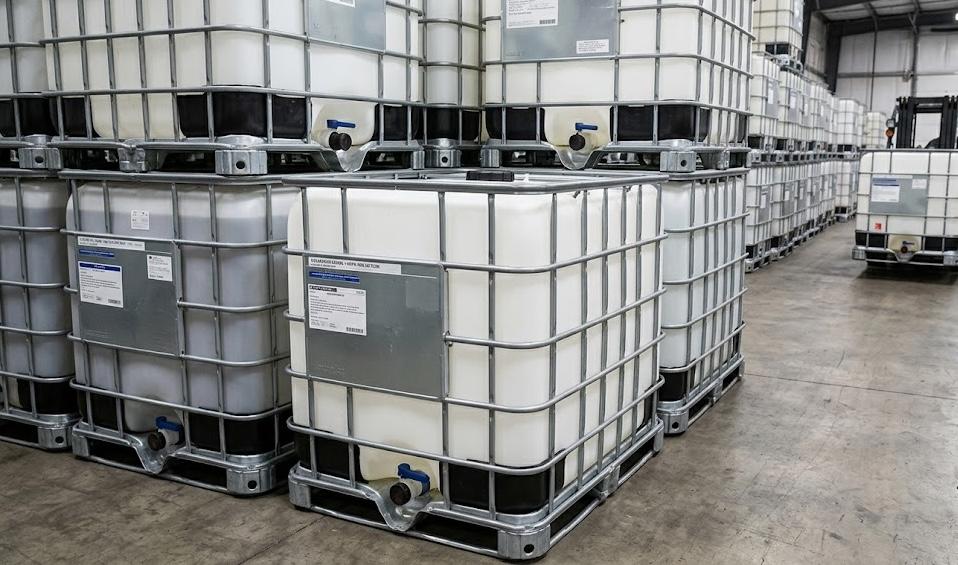
Answer first: reconditioning is the process of taking a used IBC and cleaning and inspecting it so it can be refilled. IBC Denver doesn’t recondition totes itself; we pass your request to partner suppliers who do. Processes vary by supplier, but the steps below are what reconditioning typically involves.
What reconditioning typically involves
1 — Intake
The tote is checked in and its prior contents are recorded, because that history decides what the tote can safely hold next.
2 — Drain
Any residual liquid is removed and handled according to what it is.
3 — Exterior clean
The bottle and cage are pressure-washed to remove dust, mud and surface dirt.
4 — Interior wash
The inside of the bottle is washed, often with hot water and a cleaning solution, to break down residue you can’t see.
5 — Rinse
The bottle is rinsed to remove the cleaning solution and loosened residue.
6 — Leak check
The tote is checked for leaks at the valve, the lid and the bottle itself. Totes that leak are repaired, rebottled or set aside.
7 — Inspection and parts
Cage, pallet, valve, lid and gaskets are inspected. Worn parts may be replaced; totes that can’t be brought back are better routed to recycling.
Timing
Turnaround depends on the partner supplier, the number of totes and what they last held. A partner supplier follows up on your request and confirms timing with you.
Questions to ask a reconditioner
Before you buy reconditioned totes or send your own, it is worth asking the supplier:
- What cleaning steps the tote went through
- What the tote held before, and how that is documented
- Whether the tote was leak-checked
- Which parts, if any, were replaced
- What records they can provide with the tote
Reconditioning your own totes
Sending your own totes out for reconditioning, rather than buying replacements, can make sense when you have totes you want to keep in circulation, or when you want to keep a known history on your own packaging.
Include the tote count, what the totes held, and what you plan to fill them with next. The partner supplier will tell you whether reconditioning suits that use and what it involves.
Good rules for any reconditioned tote
- Know what the tote held before, in writing.
- Don’t fill a tote with something incompatible with what it last held.
- Inspect the valve and lid seal before filling.
- For food, beverage or other sensitive uses, confirm requirements with the supplier and check current regulations.
Totes that can’t be reconditioned can often be recycled instead.